
Traditional Wallpapers Installation
Surfaces to be covered with traditional wallpaper must be clean and smooth. Loose paint or other wallcoverings must be removed. Nailheads, nicks, gouges, and other surface imperfections should be filled, sanded smooth, and sealed.
On new walls, drywall joints should be taped, bedded, and sanded smooth. This wallpaper can be installed over almost any surface that has been properly prepared.
Do not install this wallpaper over ballpoint pen markings, wax crayons, ink markers, oil-based stains, or any foreign matter that may bleed through the vinly.
If your wall isn’t smooth, you“ll need to either size the wall or apply a wallpaper liner which might require a primer layer as well.
Traditional wallpapers can be applied to lightly textured walls using the adhesives we recommend.
Check your order

Prepare your wall




Gather your supplies
 Wallpaper
 Clean cloth
 Wallpaper paste
 Level and Straightedge
 Measuring tape
 Craft knife with extra blades
 Pencil
 Paint roller & tray
 Drop cloth
 Smoothing tool
 Sponge & bucket
 Helper ( is always handy )
Mark your starting point


Traditional Wallpaper Paste Recommendations
PRIMERS
Gardner-Gibson: Dynamite 221, 222 or 7222
Roman: Pro 909, Pro 935 R-35, Pro 988, Pro 990, or Pro Ultra Prime 977
Benjamin-Moore: Universal Wall Grip 203
Sherwin-Williams: PrepRite ProBlock, PrepRite Bonding, or Pre-Wallcovering Primer
Zissner: Gardz
ADHESIVES
Gardner-Gibson: Dynamite 234, 433 or 780
Roman: Pro 774, Pro 838, Pro 870 or Pro 888
Paste the wallpaper
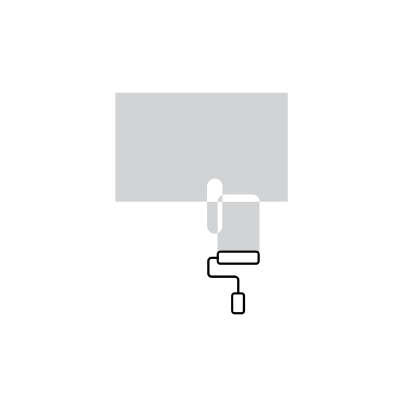
Apply the paste to your strip in the back of each strip by rolling it onto the middle of the sheet and then working it to the edges. All of the paper should be pasted evenly along the entire length and width of the strip.
Book your wallpaper

Book the strip by folding the top and bottom edges into the middle (pasted side to pasted side), making sure the side edges line up properly.

Roll up the folded wallpaper and don’t curl out and dry prematurely. It should remain like this for 5 to 7 minutes to allow the paste to absorb and the paper to expand and relax back to it’s new normal. This method will keep the adhesive wet and help handle the panels to ensure an easy installation.
Position the first strip
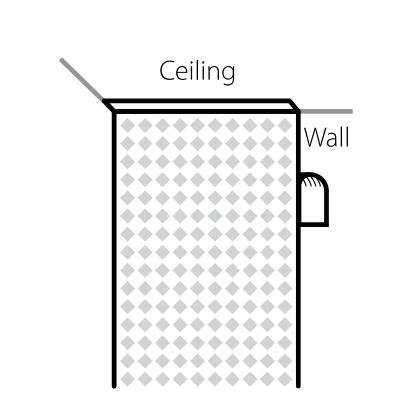
Apply the wallpaper to the top of the wall, allowing a bit of excess to overlap the ceiling (this will be trimmed off later). Align the right side of the strip to the guiding line you previously drew.
Apply and smooth the wallpaper
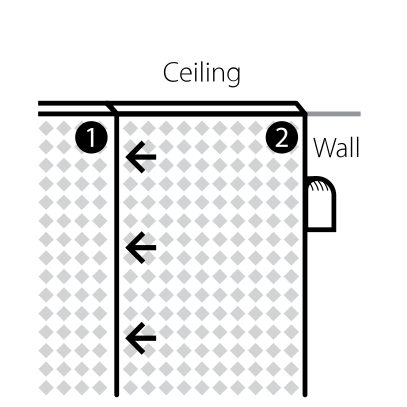
Use a wallpaper brush or smoothing tool to gently work the paper onto the wall, working from the tip and middle, down, and out. Smooth the surface, working to take out air bubbles as you go.
Smooth again
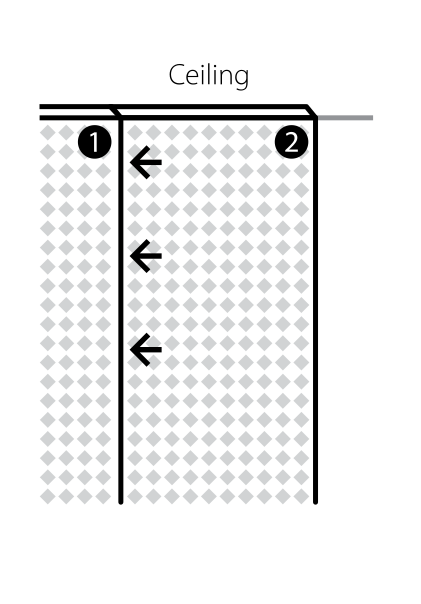
Select your next strip and apply it, so it’s left side is butted to the right edge of the previous panel matching the repeat. Smooth the second panel into the wall as you did with the first panel. Repeat the process and then smooths out any air bubbles. Try to avoid getting paste on the surface of the wallpaper. Immediately remove excess adhesive from the wallpaper surface seam using a natural sponge, and a soft bristle brush; frequently rinse it in warm water and dry it with a cotton towel.
Trim extra material
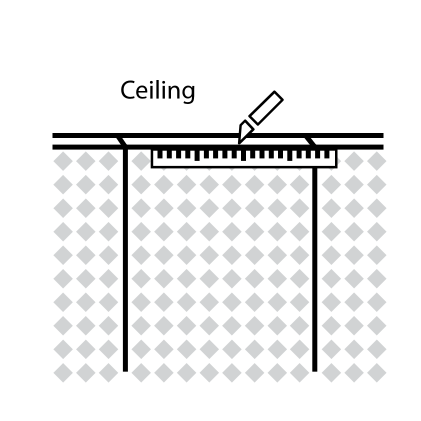
Trim excess material at the ceiling and baseboard with a straightedge and a sharp craft knife. Change the blade often to ensure a smooth cut.
Overlap
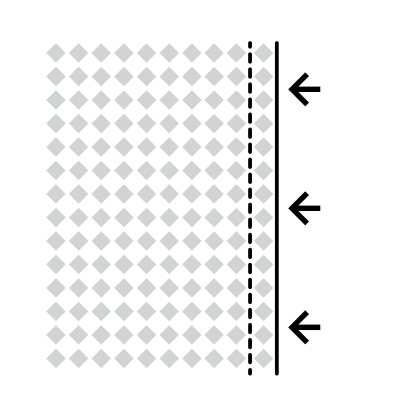
We added an extra 0,8” to your wallpaper panels for you to install one over the other. You must place the next panel 0,8” over the previous one. For textured walls, overlap helps maintain the dimensional stability of the whole installation.
Do you still need guidance?
Contact our customer service with any questions you might have.
Contact UsMade to Measure
Custom-sized to fit your space perfectly
FabbHome Rewards
Earn points with every purchase.
Join for free.
Designer Trade Program
Exclusive pricing for design professionals.
Apply today.
Dedicated Support
Our team is here to help at every step